

If you have opened your hive to find deformed wings, spotty brood, or a colony that struggles to build winter stores, varroa mites are likely the culprit. Choosing the right treatment strip can feel overwhelming with so many active ingredients, application windows, and safety warnings to sort through.
If you or a household member has a known allergic reaction to bee stings, talk to a doctor before starting a hive, and check your local ordinance for keeping bees.
This guide walks you through how to choose varroa mite treatment strips for your apiary in 2026, whether you manage two backyard hives or a larger sideline operation. We focus on what matters most for effectiveness and colony health, and we highlight a few representative options to help you compare without the noise.
Understand Active Ingredients and How They Work
Treatment strips rely on different compounds, and each works differently inside the hive. Oxalic acid strips like the slow-release Varroxsan option deliver a naturally occurring acid that targets mites on adult bees through contact, while amitraz-based strips such as Apivar 2.0 use a synthetic compound with controlled release over several weeks to reach mites as they emerge with brood.
Your choice should reflect your management philosophy and your rotation plan for the season. If you prefer organic-acid approaches and want to minimize synthetic residues in wax, oxalic acid strips may align better with your goals, while amitraz offers a proven synthetic route when you need strong efficacy and can follow label withdrawal guidance. We recommend reviewing label claims for brood presence and honey super restrictions before you decide.
Match the Strip Format to Your Hive Setup
Strips vary in how you place them and how long they remain in the colony. Some slow-release strips are draped over the top bars where bees walk across them and distribute the active ingredient through the cluster, while others are hung vertically between brood frames for continuous contact over a 42 to 56 day treatment period.
Consider your hive size, frame count, and number of colonies when you evaluate pack sizes and dosage. A 20-strip pack may suit multiple hives or a full season rotation, while a 12-strip pack is often sized for a smaller apiary with two to three colonies. Also confirm whether the product is approved for use with honey supers on, as many labels require supers to be removed. For safe handling during installation, see our comparison of beekeeping gloves comparison and our best bee smoker for backyard setups to keep inspections calm.
Plan How You Will Measure Mite Levels
You should never apply strips blindly, you need a reliable way to assess mite load before treatment and to verify results afterward. Tools like the Foxhound Bee Company Varroa Easy Check Mite Tester let you perform an alcohol wash or powdered sugar roll to get an accurate mite count from a sample of nurse bees, which helps you decide if treatment is warranted.
For ongoing passive monitoring between active samples, a screened bottom board with a counting board helps you track natural mite drop over time. The Varroa Mite Counting Board for Monitoring Mite drop is designed to slide under an 8-frame hive to collect fallen mites and also to close off the screen when you need to regulate airflow. Using both active sampling and passive drop counts gives you a clearer picture of infestation pressure through October and into winter prep.
Choose Based on Season and Temperature Windows
Timing is critical for success, and not every strip works well in every season. Some oxalic acid strips are more flexible across temperatures and can be used when brood is present, while certain synthetics have specific temperature ranges and require a defined treatment duration to reach mites under cappings as brood emerges.
Think about your local honey flow and harvest schedule before you commit to a product. If you need to treat during a flow, you must select a product explicitly labeled for use with supers on, otherwise you will need to wait until after you pull honey. Products that advertise minimal maintenance and gradual delivery over the full treatment period can reduce how often you need to open the hive in cold, windy, or rainy periods.
Consider Residue, Resistance and Ease of Use
Every treatment leaves a footprint, so review residue and resistance information carefully. Synthetic miticides like amitraz require strict adherence to label dosage, placement, and removal timing to avoid contaminating wax and honey, and rotating active ingredients from year to year helps slow resistance development in your local mite population.
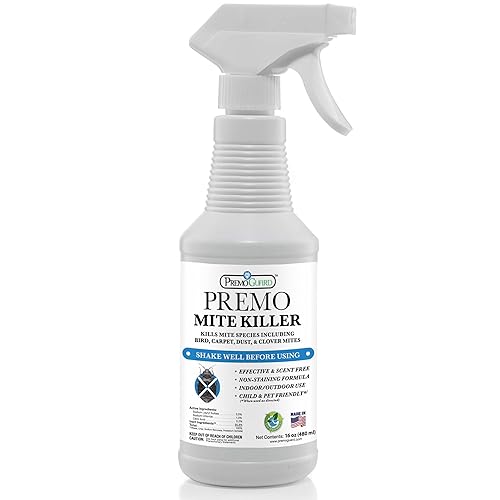
Natural or plant-based sprays marketed for home use, such as the Premo Guard Natural Mite Spray for dust and bird mites, are not designed for honey bee colonies and should not be substituted for EPA-registered varroa strips. For hive use, stick to products registered for varroa in honey bees, follow glove and handling precautions, and store unused strips as directed. If you also bottle honey after treatment, you may find our comparison of honey jars vs bee smoker gear useful for post-harvest handling.
A Few Picks Worth Considering
Below are a few representative examples that illustrate the different approaches discussed above, from slow-release oxalic acid strips to controlled-release amitraz and essential monitoring accessories. We present them as starting points to compare format and intended use, not as a definitive ranking for every beekeeper.
This article contains affiliate links. If you buy through one of our links, The Yardstead may earn a commission at no extra cost to you. Commissions never influence which products we recommend or how we rank them. Read our Affiliate Disclosure for details.
Quick Picks at a Glance

Prime Varroxsan Oxalic Acid Varroa Mite Treatment Strips

Prime Foxhound Bee Company Varroa Easy Check Mite Tester

Prime Apivar 2.0 Amitraz Strips

Prime Foxhound Bee Company Varroa Mite Counting Boards
Prime Premo Guard Mite Spray 16oz
As an Amazon Associate we earn from qualifying purchases. Product prices and availability are accurate as of the date/time indicated.
Pros
- Extremely easy to install with no mixing, spraying or special equipment
- Safe to use with honey supers on and approved for organic beekeeping
- Works year round with no need to monitor temperature windows
- Long 42 to 56 day coverage significantly reduces labor and hive visits
- High efficacy up to 98.6 percent for both prevention and heavy infestations
Cons
- Strips must be manually removed after about 6 weeks, requiring a second hive visit
- May need trimming to fit properly in medium boxes
- Cardboard strips can feel bulky and 20 count may be more than single-hive owners need
Varroxsan from VITA Beehealth is an extended-release oxalic acid strip treatment designed to control Varroa mites in honey bee colonies. The 20-count pack treats 5 to 10 hives, making it ideal for hobbyists and small apiaries seeking low maintenance mite management.
Its standout feature is 42 to 56 days of continuous protection with no mixing, spraying or reapplication. Reviewers consistently praise how simple it is to install and report strong mite reduction, with efficacy up to 98.6 percent for both preventative maintenance and heavy infestations.
Each strip uses a cardboard matrix infused with oxalic acid dihydrate and glycerin that drapes over the brood frame. Bees walk across the strips and distribute the active ingredient naturally, and the pre-dosed design ensures consistent dosing without handling chemicals.
There are a few tradeoffs to consider. Strips must be removed after about six weeks, so you will need to schedule a follow up visit, and beekeepers using medium boxes may need to trim the strips for a proper fit. Some single-hive users also note that 20 strips is more than needed at once, though the pack is resealable.
Overall, Varroxsan is a highly effective, bee-friendly option that simplifies mite control year round. With no temperature restrictions and safe use with honey supers on, it is a top choice for beekeepers who want reliable, extended protection with minimal labor.
Active Ingredient: Oxalic acid dihydrate with glycerin
Form Factor: Cardboard matrix strip
Unit Count: 20 strips per pack, also available in 60 and 600
Coverage: 2 to 4 strips per colony, treats 5 to 10 hives per 20 pack
Treatment Duration: 42 to 56 days of continuous release
Compatibility: Safe for bees, brood and queens, safe with honey supers, suitable for organic beekeeping
Temperature Requirements: No temperature restrictions, for use in spring, summer, fall and winter
Manufacturer: VITA Beehealth
Best For: Hobbyist and sideliner beekeepers managing Varroa mites
Pros
- Highly accurate mite counts with patented basket design
- Flexible 3-method compatibility for different beekeeping preferences
- Integrated measuring cup simplifies sampling with no extra tools needed
- Durable, easy to clean and glove-friendly construction
- Highly rated for ease of use and reliability
Cons
- Most accurate alcohol wash method requires sacrificing a small bee sample
- Alcohol, powdered sugar and CO2 cartridges not included
- Manual shaking and visual mite counting still required
The Varroa Easy Check by Foxhound Bee Company, manufactured by Veto-Pharma, is a dedicated mite sampling tool designed to help beekeepers monitor Varroa mite infestations quickly and accurately. It is built for both backyard hobbyists and commercial apiaries who need regular, reliable hive health checks without complicated equipment.
Its standout feature is true 3-in-1 versatility, supporting alcohol wash, powdered sugar roll and CO2 methods in a single device. The patented basket design lets mites fall through for easy counting while bees stay contained, delivering fast and consistent results that reviewers praise for accuracy and simplicity.
Build quality is practical and beekeeper friendly, with durable mesh and plastic construction that holds up to repeated field use. The integrated measuring basket has molded lines for precise bee sampling, and the wide-mouth design makes it easy to handle and clean even while wearing gloves.
There are a few limitations to consider. You still need to manually shake and count mites, and consumables like alcohol, sugar or CO2 are not included. Like any wash-based tester, the most accurate method requires sacrificing a small sample of bees.
Overall, the Varroa Easy Check stands out as the go-to mite tester for its accuracy, flexibility and ease of use. If you want a proven, no-fuss tool to stay ahead of Varroa pressure and keep colonies healthy, this is a smart and reliable investment.
Brand: Foxhound Bee Company, Manufacturer: Veto-Pharma, Model: Varroa Easy Check Mite Tester
Target Species: Varroa mites, Intended Use: Monitoring mite infestations and hive health management
Material: Durable mesh and plastic, Features: Patented mite-separation basket with built-in measuring cup and molded fill lines
Compatibility: Alcohol wash, powdered sugar roll and CO2 methods, Category: Beekeeping Supplies
For an alcohol wash, add bees to the fill line, add alcohol, shake gently, then invert and shake to separate mites for counting. For a sugar roll, use powdered sugar instead of alcohol and follow the same shake and count process.
For CO2, use a compatible canister to anesthetize bees and dislodge mites through the basket. After each test, empty, rinse and dry the unit thoroughly to keep the mesh clear and ready for the next hive check.
Pros
- Trusted amitraz-based formula with strong user satisfaction for Varroa control
- Controlled-release strips ensure consistent coverage without mixing or measuring
- Very easy to install between brood frames, great for beekeepers of all experience levels
- Fits standard Langstroth configurations and works across seasons
Cons
- Cannot be used while honey supers are on the hive, requires careful timing around honey flow
- Strict label compliance required for dosage by colony size and timely strip removal
- Registered pesticide with shipping restrictions that vary by state
Apivar 2.0 is an amitraz-based Varroa mite treatment designed for managed honey bee colonies in standard Langstroth hives. It is intended for both hobbyist beekeepers with a few hives and working apiaries managing many colonies.
The standout feature is its controlled-release polymer strip that delivers amitraz gradually over the full treatment window. In real-world use, beekeepers praise its simple installation between brood frames with no mixing or measuring, plus consistent mite management with little follow-up.
Design and build focus on a durable polymer strip that holds the active ingredient and releases it steadily. The strips are sized to fit securely in the brood chamber and maintain reliable delivery when installed according to label directions.
There are important limitations to consider. Honey supers must be removed and cannot be present during treatment, so you must plan around honey harvest timing. As a registered pesticide, it also requires exact dosing by colony size and timely removal, and shipping availability varies by state.
Overall, Apivar 2.0 is a dependable, low-complexity option for beekeepers who want proven Varroa control without extra preparation. If you can schedule treatment outside the honey flow and follow label instructions, it offers effective performance with minimal hive disturbance.
Manufacturer: Veto-Pharma
Product: Apivar 2.0 Amitraz Strips for Varroa Mite Control, 12 Strips
Active Ingredient: Amitraz in controlled-release polymer strips
Application: Placed directly between brood frames in the brood chamber
Compatibility: Designed for standard Langstroth hive configurations
Package Dimensions: 15 x 5.55 x 1.65 inches
Item Weight: 8.1 ounces
Important Note: Do not use with honey supers present, follow EPA-approved label for dosage and removal
Pros
- Numbered, high-contrast grid simplifies and speeds up mite counting
- Versatile use for monitoring, winter draft blocking and closing hives during treatments
- Sturdy corrugated board can be reused many times
- Trimmable design adapts to different bottom board sizes
- Four boards per pack offers good value for multi-hive beekeepers
Cons
- Not pre-coated with adhesive, requires petroleum jelly or oil to make it sticky
- May need trimming to fit some standard 8-frame and 10-frame bottom board slots
- Cardboard material is less weather resistant than plastic alternatives
The Foxhound Bee Company Varroa Mite Counting Boards are 8-frame IPM boards designed to slide into screened bottom boards for 24-hour mite drop monitoring. They are ideal for hobbyist and small apiary beekeepers who need an affordable, simple way to track varroa levels and make informed treatment decisions.
The standout feature is the high-contrast checkerboard grid with numbered squares that makes brownish-red mites easy to spot and count. When coated with a thin layer of petroleum jelly, the boards effectively trap falling mites and debris for an accurate assessment, and they also double as winter draft blockers or hive closers during treatments.
Built from thin yet sturdy 2mm corrugated board, each tray measures 20 inches by 12 inches for 8-frame equipment and can be trimmed for a custom fit. The printed grid holds up well over multiple uses, and the 4-pack provides enough boards to monitor several hives at once without constant cleaning.
These are not pre-glued sticky boards, so you must apply your own coating, which some buyers expect to be included. Fit can also be inconsistent, as several users report needing to trim the boards even for standard slots, so keep scissors in your tool kit.
Overall, these boards deliver practical, reusable mite monitoring at a good value for beekeepers comfortable with a little DIY prep. If you want a simple, economical IPM tool and do not mind adding petroleum jelly and occasional trimming, they are a solid addition to your beekeeping supplies.
Brand: Foxhound Bee Company
Style: Slide-In Varroa Mite Board, 8-Frame, 4-Pack
Dimensions: 20 x 12 inches x 2mm thick, trimmable corrugated board
Also Available: 10-Frame version measures 20 x 15.125 inches x 2mm
Function: 24-hour mite drop monitoring, winter draft reduction and hive closing during treatments
Application: Coat with petroleum jelly to create sticky surface for mite capture
Pros
- Natural and non-toxic plant-based formula with citric acid
- Effective against multiple mite species and all life stages
- Safe for use around children, pets and livestock when used as directed
- Leaves no stains or lingering odors on fabrics and bedding
- Versatile for indoor furniture, bedding and animal enclosures
Cons
- Requires consistent application over several days for best results
- Can leave slippery residue on hard floors that needs washing
- Strong initial odor during application, requires ventilation until dry
The Premo Guard Natural Mite Spray is a 16 fluid ounce plant-based solution designed to kill mites on contact. It is built for households, farms and animal enclosures dealing with dust, bird, carpet, spider and rat mites, making it ideal for families with children, pets or livestock.
Its standout strength is the ability to target mites at every life stage, including eggs and nymphs, for more complete control. Reviewers report visible results within a few days of consistent application, especially when treating entry points, bedding and coops as directed.
Formulated with citric acid as the active ingredient, the spray is non-staining and scent free once dry. The liquid applies easily to mattresses, couches, pillows and fabrics without leaving odors, and it is made in the USA under quality manufacturing standards.
As with most natural mite treatments, it requires diligent reapplication over several days and thorough cleaning to fully resolve an infestation. Users note it can leave a slippery residue on hard floors and has a strong initial smell, so ventilation and time to dry are recommended.
Overall, Premo Guard offers a practical, family friendly alternative to harsh chemical treatments for ongoing mite management. For anyone seeking a versatile, non-toxic spray for home and animal areas, it is a reliable and well regarded choice.
Brand: Premo Guard, Form: Liquid Spray, Volume: 16 Fluid Ounces, Active Ingredient: Citric Acid, Target Species: Bird, Spider, Rat, Dust and Carpet Mites.
Use Sites: Mattresses, couches, pillows, carpets, cages, chicken coops and pens. Features a non-staining, scent free formula that is gentle for homes with children and pets when used as directed.
Application: Kills on contact and targets multiple life stages. Designed for regular use as part of an integrated cleaning and mite management routine.
Common Mistakes to Avoid
One common error is treating without first measuring mite levels, which leads to unnecessary chemical exposure or missed infestations that weaken winter bees. Another is leaving strips in longer than the label directs, hoping for extra protection, which can increase residues in wax and encourage resistance rather than improving control.
Beekeepers also run into trouble by using household mite sprays inside hives or reusing old strips from a previous season to save money. Only use products specifically labeled for varroa in honey bee hives, and always remove and dispose of strips on schedule according to the instructions for your chosen product.
Finally, avoid treating right before or during honey harvest without checking super restrictions on the label. If you are unsure about timing, evaluate your mite counts early in the season and plan treatments for after you pull supers, or select a product that is explicitly approved for use with supers on.
Frequently Asked Questions
How often should I apply varroa mite treatment strips?
Frequency depends on your mite counts, local pressure, and the product label, not a fixed calendar. Many beekeepers evaluate colonies in early spring and late summer, then apply strips when counts exceed threshold and again as needed to protect winter bees, always following the required treatment duration and retreatment interval.
Can I use varroa mite treatment strips with honey supers on?
Some strips are labeled for use with supers on, while others require complete super removal to avoid residues. Check the label for your specific product, and when in doubt, complete your honey harvest before you begin treatment to keep honey free from contaminants.
Do I need to monitor mite levels if I use treatment strips regularly?
Yes, regular monitoring remains essential even with a routine treatment plan. Measuring mite levels before and after application confirms whether the treatment was effective, alerts you to resistance issues, and helps you avoid overtreating colonies that are already below threshold.
Browse more picks in our Beekeeping category, or see our related guide on Goatskin Gloves Head-to-Head.
This roundup is not recommended for anyone with a known severe allergy to bee stings without medical guidance, and beginners should start with a single hive rather than a full apiary.




Write Your Review
No reviews yet. Be the first to share your experience!