

A workshop stool should glide when you push off, swivel without grinding, and lock in place when you need it to stay put. When it starts to drag, squeak, or tip on uneven concrete, every low repair turns into a frustrating workout.
In this guide we walk you through how to maintain workshop stool rolling performance and how to choose a stool that is easier to keep rolling. You will learn what to check before you buy, how to care for casters and pneumatic parts, and which small habits prevent most rolling problems. For more workshop organization ideas, explore our Shed Organization & Workshop resources.
How to Choose for Smooth Rolling That Lasts
Match Caster Type to Your Floor
Your floor determines how well any stool will roll. On smooth sealed concrete, 2.5 inch PP or nylon casters roll fast and resist oil, while on rough or cracked concrete, larger 4 inch elastic rubber casters absorb bumps and protect the floor.
We recommend looking for 360 degree swivel casters with ball bearings and a compression mechanism for wear resistance. If you work on mixed surfaces, choose rubber wheels with silent shock absorber technology and consider models with two brake casters so you can park the stool during precise work.
Check Weight Capacity and Frame Stability
A stool that is near its limit will flex, and flex makes rolling harder. Look for a thickened tubular steel frame or reinforced steel base that is rated well above your body weight plus tools. A 300 lb or 330 lb capacity gives you headroom if you lean or carry parts.
Base shape matters as much as steel thickness. An extra wide star shaped base, around 22.4 inches in diameter, resists tipping on uneven floors better than a narrow base. Five caster layouts also distribute load more evenly than four, which helps you roll under load without wobbling.
Evaluate Height Adjustment and Comfort Hardware
Pneumatic height adjustment is convenient, but it is also a common failure point if you ignore it. Choose a stool with a smooth pneumatic cylinder and a simple side lever, with a usable range that fits your bench, such as 15 to 20 inches for low work or 18 to 25.59 inches for bench height tasks.
Comfort features affect how you move. A thick padded seat with waterproof PU or PVC cover wipes clean after oil splashes, and a 12.6 inch diameter seat with 360 degree swivel lets you reposition without dragging the base. If you sit for long sessions, a backrest and an adjustable footring reduce fatigue that leads to jerky rolling.
Look for Storage That Keeps Debris Off the Casters
Rolling problems often start with clutter. Tool trays under the seat keep fasteners and sockets off the floor, so you are less likely to run over screws that jam a caster. Models with a large 15 inch tray, three partitions, or slide out drawers help you sort parts and keep the floor clear.
We suggest choosing trays with secure edges or magnetic liners to hold metal parts during movement. Pairing your stool with organized storage, like the setup we describe in our best rolling tool chest for outdoor shed guide, reduces trips across the shop and limits dust and shavings that clog wheels.
Prioritize Brakes, Locks, and Serviceable Parts
Brakes are not just for safety, they reduce wear. Two locking casters let you keep the stool stationary while you apply torque, so the wheels do not scrub sideways and flat spot. Check that locks engage firmly with your foot and release without sticking.
Finally, favor designs where casters are fixed with locknuts and thread glue and where the seat cushion and cylinder are replaceable. A stool you can service, clean, and tighten will keep rolling far longer than a sealed unit you cannot maintain. Similar maintenance thinking applies around the property, as we discuss in metal chicken run 10×20 gate Won’t Latch? 5 fixes before you replace it.
A Few Picks Worth Considering
Below are a few examples that show the range of features to look for, from basic padded rollers to heavy duty adjustable models with trays and brakes. Think of them as starting points to compare against the factors above, not an exhaustive list of every option.
This article contains affiliate links. If you buy through one of our links, The Yardstead may earn a commission at no extra cost to you. Commissions never influence which products we recommend or how we rank them. Read our Affiliate Disclosure for details.
Quick Picks at a Glance
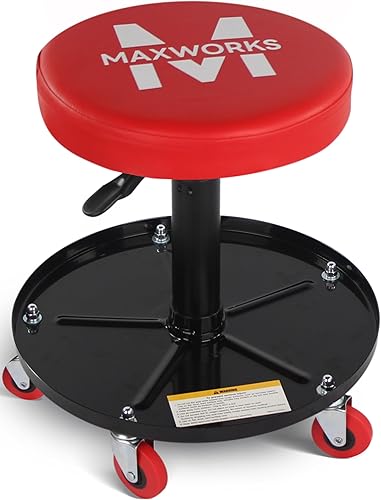
MaxWorks 80771 Pneumatic Creeper Roller Seat

Prime VEVOR Rolling Mechanic Stool with Tool Tray

Prime PowerSmart Rolling Mechanic Stool with Tool Tray

VEVOR Rolling Mechanic Stool 300 lbs Capacity

FREEKYROCK Rolling Shop Stool with Wheels
As an Amazon Associate we earn from qualifying purchases. Product prices and availability are accurate as of the date/time indicated.
Pros
- Pneumatic height adjustment from 15 to 20 inches for versatile ergonomic positioning
- Thick comfortable seat cushion with convenient under seat tool tray
- Five smooth rolling, non-marring swivel casters protect floors
- Very easy tool-free assembly and lightweight portability
- Stable and durable construction for garage and workshop use
Cons
- Small 2.5 inch casters can struggle on cracked, rough or uneven floors
- No locking casters, so it may roll when applying heavy forward force
- Seat padding may feel thin for very long all day sessions compared to premium models
The MaxWorks 80771 is a pneumatic roller seat and creeper designed for garage, workshop and home use. It is built for mechanics, detailers, woodworkers and anyone who spends long periods working at low height and wants to avoid kneeling or bending.
Its standout feature is the pneumatic height adjustment from 15 to 20 inches, controlled by a simple side lever for quick ergonomic positioning. In real use, reviewers praise how smoothly the five swivel casters glide on concrete while the under seat tray keeps essential tools and fasteners within reach as you roll.
Design is simple and practical, with a thick cushioned seat, sturdy pneumatic cylinder and a 15.25 inch circular tool tray integrated into the base. At just 10.5 pounds, the stool feels light yet stable, and assembly requires no tools since you simply press the seat onto the pedestal.
The compact 2.5 inch casters work best on smooth concrete and can catch on cracks, expansion joints or rough surfaces. It also lacks locking wheels, so it may drift when you apply strong forward force, and users wanting extra thick padding for all day use might prefer a premium shop chair.
Overall, the MaxWorks 80771 delivers excellent comfort, mobility and convenience for its class. It is a smart, versatile pick for home garages and small shops where an affordable, adjustable rolling seat can save your knees and speed up every job.
Model: MaxWorks 80771 Pneumatic Roller Seat, Universal Fit
Height Range: 15 to 20 inches with pneumatic side lever adjustment
Capacity and Weight: 300 lb maximum capacity, 10.5 lb product weight
Construction: Thick padded seat, 15.25 inch integrated tool tray, five 2.5 inch non-marring swivel casters
Dimensions: 15.75 x 15.75 x 4.76 inches, Manufacturer MaxxHaul
Pros
- Sturdy steel construction supports up to 250 LBS without wobbling or tipping
- Smooth, wear-resistant 360-degree casters with locknuts and thread glue for stability
- Comfortable wide padded seat with waterproof, oilproof PU that is easy to clean
- Integrated partitioned tool tray saves time and keeps essentials organized
- Lightweight and quick to assemble, ideal for garages, homes, and mobile use
Cons
- Assembly instructions can be confusing and may require reversing seat supports to fit hardware
- Fixed 14.2-inch height may feel too low for taller users or higher workbenches
- Small 2.5-inch casters can struggle on heavily cracked, gravel, or very rough surfaces
The VEVOR Rolling Creeper Garage Shop Seat is a compact 14.2 inch rolling stool built for low work like auto repair, detailing, and furniture maintenance. It is best suited for home mechanics, DIYers, and anyone who wants an affordable alternative to kneeling or sitting on the floor.
In real world use, the four 360 degree ball bearing casters deliver smooth, flexible steering across garage floors and driveways. The wide padded seat stays comfortable during extended jobs, while the under seat tray with three partitions keeps tools, screws, and parts organized and within arm's reach.
Build quality centers on a thickened tubular steel frame that resists bending and tipping, with casters secured by locknuts and thread glue for stability. The seat uses waterproof and oilproof PU that wipes clean in seconds, and the whole unit weighs just 7.5 pounds for easy portability.
The stool is not without flaws. Assembly instructions can be unclear and some users need to reverse the seat supports to align the hardware correctly. The fixed height and small 2.5 inch wheels also limit comfort for taller users and performance on very rough or gravel surfaces.
Overall, the VEVOR Rolling Creeper offers impressive durability, comfort, and convenience for its budget friendly class. If you need a sturdy, mobile shop seat with smart storage for everyday garage tasks, it is a practical and proven choice that gets the job done.
Brand: VEVOR, Model: Rolling Creeper Garage, Capacity: 250 LBS / 113 kg. Dimensions: 14.2 x 14.2 x 14.2 inches, Weight: 7.5 pounds, Color: Black.
Frame: Thickened tubular steel with locknut secured casters. Seat: Wide padded PU, waterproof and oilproof. Casters: Four 2.5 inch 360 degree ball bearing PP casters with compression mechanism.
Storage: Large under seat tool tray with three partitions for tools and parts. Assembly required, lightweight portable design for garage, shop, home, and roadside use.
Pros
- Strong 330 lb weight capacity with stable steel construction
- Smooth pneumatic lever for quick height changes
- Large integrated tool tray improves workflow efficiency
- Comfortable cushioned swivel seat praised by users
- Easy assembly and stable rolling on garage floors
Cons
- Metal seat surface is less breathable than fabric options
- Compact 12.6 inch seat may feel small for some users
- Casters work best on smooth concrete, not rough commercial floors
The PowerSmart DB1101 Roller Seat is a pneumatic mechanic stool built for automotive repair, garage maintenance, detailing, and workshop projects. It is ideal for home mechanics, DIY enthusiasts, and detailers who want to work comfortably at vehicle height without constant kneeling or standing.
Its standout feature is the smooth pneumatic height control that adjusts from 18 to 23 inches in seconds, helping reduce bending and fatigue when working on tires, brakes, or low engine components. The oversized 15 inch tool tray underneath keeps sockets, wrenches, and fasteners organized and within reach, while five 360 degree casters provide fluid mobility around cars and workbenches.
Design and build quality exceed expectations for its class, with a reinforced alloy steel frame, sturdy 14 pound base, and thickly cushioned 12.6 inch swivel seat. Users highlight the heavy gauge metal, robust wheels, and simple assembly that requires only attaching the casters and pressing the seat into place.
There are minor drawbacks to note. The metal seat covering, while durable and easy to wipe clean, is less breathable than fabric for long sessions in warm garages. The compact seat diameter and caster design are best suited for smooth garage floors and may feel less stable on uneven or debris covered commercial surfaces.
Overall, the PowerSmart roller seat offers excellent value for home garages and light shop use, blending comfort, adjustability, and practical storage. If you need an affordable, mobile stool that eases back strain and keeps tools close, it is a reliable and highly functional choice.
Model: PowerSmart DB1101 Roller Seat
Capacity: 330 lbs maximum weight recommendation
Height Range: 18 to 23 inches with pneumatic adjustment
Seat: 12.6 inch diameter, thickly cushioned, 360 degree swivel
Storage: Oversized 15 inch built in tool tray
Mobility: Five 360 degree swivel casters
Materials: Alloy steel frame, metal seat
Dimensions: 15.5 x 15.5 x 7 inches, 14 pounds
Color: Red and Black
Pros
- Excellent mobility on concrete with smooth, quiet rolling and lockable wheels
- Comfortable padded seat reduces strain during long garage sessions
- Practical three-tray storage system keeps tools organized and accessible
- Sturdy steel construction feels durable and stable under load
- Compact and easy to assemble, stores neatly in tight garage spaces
Cons
- Plastic seat lacks breathability and has no backrest for extended use
- Pre-sized tray dividers may not fit larger bottles or bulky tools
- Seat width is relatively narrow which may feel small for larger users
The VEVOR Mechanic Stool is a low-profile rolling garage seat designed for automotive repair, detailing, and general shop work. With a 300-pound capacity and integrated tool storage, it is built for home mechanics, car enthusiasts, and anyone who needs to work comfortably at a low height without kneeling on concrete.
In real-world use, the standout feature is mobility. The four 4-inch rubber casters glide smoothly over garage floors, cracks and bumps, and rotate 360 degrees for easy repositioning. Reviewers consistently praise how easily it rolls while detailing or checking tire pressure, and the two brake casters keep it firmly in place when needed.
Comfort and organization are equally well thought out. The 15.4-inch high seat uses a thick sponge cushion with a curved, wrap-around shape to support posture during longer tasks. The three slide-out trays, including two with card slot partitions and a pull-out drawer underneath, keep tools, compounds, rags and pads neatly organized and within arm's reach.
Build quality is solid for the category, with a robust steel base, matte finish, and rust-resistant construction that holds its shape under heavy use. The rubber wheels are designed to be floor-friendly and shock-absorbing, while the overall unit weighs just 13.8 pounds so it is easy to move and store. The plastic seat is easy to wipe clean but feels less premium than metal or vinyl alternatives.
There are a few trade-offs to consider. The tray partitions are not adjustable, so larger bottles may need to be laid on their sides, and the 9.8-inch seat width can feel narrow for bigger users. Overall, this stool delivers impressive value, comfort and functionality for any home garage and is a smart upgrade from crawling or kneeling on the floor.
Brand: VEVOR | Model: 300 LBS Capacity Garage Stool | Type: Rolling Mechanic Seat with Wheels
Dimensions: 25.2 x 13.2 x 15.4 inches | Seat Height: 15.4 inches | Seat Width: 9.8 inches | Weight: 13.8 pounds
Capacity: Maximum Weight Recommendation 300 pounds | Frame Material: Metal, Cast Iron | Seat Material: Plastic
Wheels: Four 4-inch universal rubber casters with 360-degree rotation, includes 2 brake casters with silent shock absorber technology
Storage: Three slide-out tool trays with two partition trays, installation stickers and pull-out drawer under seat
Color: Black and Red | Finish: Matte | Assembly Required | Included: 1 x Mechanics Seat
Pros
- Wide, stable base and high 330 lb capacity provide confidence on uneven garage floors
- Pneumatic lift and adjustable footrest allow quick ergonomic positioning
- Comfortable memory foam and backrest praised for long detailing, tattoo and mechanic sessions
- Smooth, quiet rolling with locking brakes plus handy tool trays improve workflow
Cons
- Leg tubing is thin-walled according to some users, may benefit from added bracing under heavy daily use
- Large 22.4-inch base adds stability but needs more floor space in tight workshops
- Seat material is PVC over plastic base which may feel less premium than vinyl or leather alternatives
The FREEKYROCK D17 Rolling Shop Stool is a heavy-duty swivel task chair built for garages, workshops, salons and home studios. It is designed for mechanics, detailers, welders, tattoo artists and DIYers who need comfortable, mobile seating at varying work heights.
Standout features include smooth pneumatic height adjustment, a thick memory foam cushion and an adjustable footring that together reduce fatigue during long jobs. In real use, reviewers highlight easy rolling along car hulls and workbenches, stable positioning with dual locking casters, and convenient tray storage for compounds, tools and inks.
Build quality centers on an alloy steel frame with a black painted finish and an extra-wide star base that is 20 percent larger than standard. The waterproof PVC seat, ergonomic backrest and L-shaped modern profile give it a sturdy yet professional look that fits both industrial and creative spaces.
Drawbacks are minor but worth noting. A few users mention the leg tubing feels thin-walled and may flex under heavy stress, and the wide footprint can be bulky in compact areas. The plastic seat base also makes the stool more utilitarian than luxury office chairs.
Overall, the D17 delivers excellent comfort, stability and organization for a versatile rolling stool. If you want an affordable, mobile chair that supports long hours without sacrificing storage or adjustability, it is an easy recommendation.
Model: FREEKYROCK D17 Rolling Shop Stool, Color Black, Industrial Modern Style
Dimensions: 22.4 inches W x 25.59 inches H, height adjustable from 18.7 to 25.59 inches, footring diameter 15.4 inches with 0 to 5.5 inch adjustment range
Materials: Alloy steel frame with black painted finish, plastic seat base, waterproof PVC cover with 2.76-inch memory foam cushion
Capacity and Mobility: Maximum weight recommendation 330 pounds, five 360-degree casters with two locking brakes, splayed leg style with L-shaped design
Included: One shop stool with three removable storage trays, one with magnetic liner, pneumatic lift and adjustable footrest
Common Mistakes to Avoid
One of the biggest mistakes is ignoring the floor. Rolling a small hard caster over sawdust, metal shavings, and dried coolant will grind the bearings and crack the wheel surface. Sweep and then wipe the rolling zone before you sit, and clean the wheels weekly with a rag to remove hair and grit wrapped around the axle.
Another common error is overloading the tool tray and using the stool as a cart. Excess weight on one side tilts the base and forces two casters to carry most of the load, which accelerates wear. Keep heavy tools in a dedicated chest and use the under seat tray only for the fasteners and hand tools you need for the current job, much like the sorting approach in how to choose between a worm compost bin and an 80 gallon outdoor compost bin.
People also forget the pneumatic post. Spraying harsh degreasers directly on the cylinder or slamming the height lever under load can damage seals. Wipe the post with a dry cloth, check for oil film that signals a leak, and adjust height while standing slightly off the seat to reduce pressure on the valve.
Frequently Asked Questions
Why does my workshop stool not roll smoothly anymore?
Most rolling issues come from debris in the casters, loose axle nuts, or worn bearings. Remove wrapped fibers, tighten locknuts to the manufacturer spec, and add a single drop of light machine oil to each bearing, then wipe excess so it does not attract dust.
How often should I clean and lubricate the casters?
For a home shop used a few times a week, clean the wheels and tray every two weeks and lubricate bearings monthly. In a busy garage with daily use and concrete dust, clean weekly and check brake function and wheel tightness at the same time.
What features make a rolling stool easier to maintain long term?
Look for serviceable casters with locknuts, rubber or PP wheels rated for your floor, and a sealed but wipeable seat cover. A pneumatic cylinder with a protected lever, a wide stable base, and removable tool trays also makes cleaning faster and helps you keep the stool rolling smoothly through 2026 and beyond. If you want more storage pairings, see our full picks in best rolling tool chest for outdoor shed.
This roundup is not ideal for large-scale commercial storage needs; these picks are sized for typical home shed and garage use.









Write Your Review
No reviews yet. Be the first to share your experience!